In the past nearly two years since I have written on this blog, a lot has changed for me. My wife and I welcomed our first child, Seoirse, into this world on July 2, 2024. She has been such a tremendous blessing to us, and we could not have asked God for a more beautiful baby girl.
On October 31, 2024, we moved from southern Indiana to the Huntsville, Alabama area for a few reasons, but the main one being a desire to be closer to family to have help with Seoirse. I initially transferred jobs with the same company I worked for in Indiana, but I found something different at the end of February 2025. We have also recently become members of New Life Baptist Church in Harvest, Alabama, which we are thrilled to be a part of.
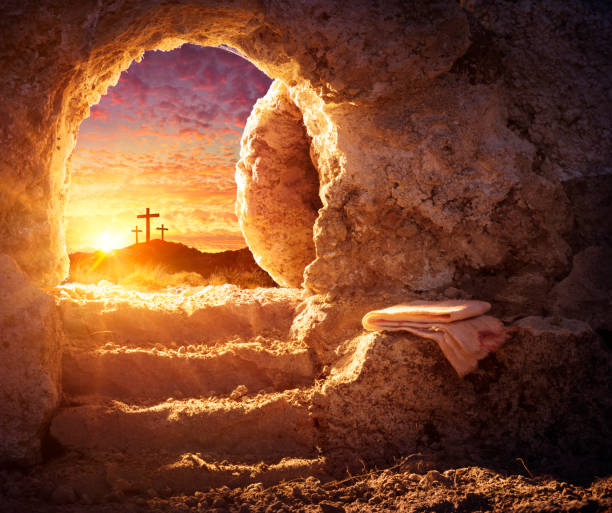
On Easter weekend this past year, we returned to Indiana to visit with some family, get together with friends, and go back to the church we attended there. Easter, of course, is the special day that Christians have set aside from other Lord’s Days to celebrate the resurrection of Jesus Christ from the dead three days after his crucifixion. You would think that after growing up in the church my whole life, this would eventually get old and become boring to me. But to this day, Easter Sunday is to me like Christmas Day is to a kid. I woke my wife and 9-month-old daughter up at 5am (really 4am for us, since Alabama is an hour behind Indiana) so that we could make it to the sunrise service where we heard the resurrection account read from the Scriptures, and sang songs about Jesus being alive. We then attended the main church service, where we heard the resurrected Christ preached from Revelation 1, and saw Jesus in all his beauty and glory.
After all this, something struck me in a way I had never thought before. “So what?” I thought to myself. Yes, I believe with all my heart that Jesus rose from the dead and that he ascended into Heaven and is now at the right hand of the Father interceding for me, but how should I live in light of that fact? Or, what does the Bible have to say about how the resurrection should impact my daily life? There are countless passages in the New Testament that connect the gospel message in general with how we should then live, but I want to know how I am called to live in light of the resurrection in particular. Two verses immediately come to my mind, and what follows in the rest of this post are my meditations on these questions over the past three months.
If then you have been raised with Christ, seek the things that are above, where Christ is, seated at the right hand of God. Colossians 3:1
We were buried therefore with him by baptism into death, in order that, just as Christ was raised from the dead by the glory of the Father, we too might walk in newness of life. Romans 6:4
The first and most foundational thing we must notice from these two verses is the union of the believer with Jesus Christ. Paul, in the rest of Romans 6, goes into detail unpacking this truth. To be brief, when someone places their faith in Christ, they are then justified, or declared to be righteous, before God (see Romans 4). However, we must also know that it is not our act of faith that makes us righteous, but it is Christ’s act of righteousness in bearing the punishment of our sins and then giving us his own righteousness in return that justifies us before God (see Romans 3:24-25; 5:18). In this, we are united to Christ. His death on the cross is also our death to the sin that once held us captive; his resurrection from the dead becomes our resurrection to new life that he enables us to live.
Once we understand the unity we share with Christ as believers, we can then move forward to understanding how we are to live in light of his resurrection. Colossians 3:1 begins with a conditional statement: “If then you have been raised with Christ, seek the things that are above.” In other words, what we seek in this life shows where our heart truly is; and whether or not we have been raised with Christ. “For where your treasure is, there your heart will be also” (Matthew 6:21). If we seek the things that are above, that is almost sure evidence that we have been raised with Christ. But if we do not seek those things, then we can likely assume the opposite. What you seek shows what you love.
What, then, does it mean to seek something? As kids, many of us played hide and seek with our parents, or perhaps with our friends. Everyone involved, except one, would go and find a hiding spot, with the hope that they would not be found by the seeker. The job of the seeker is simple. Their one goal is to devote their minds, attention, and efforts to finding all of those who are hidden.
Of course, most analogies break down, but this can be helpful in understanding the Christian life, and the Christian as one who is a seeker. “But seek first the kingdom of God and his righteousness, and all these things will be added to you” (Matthew 6:33). “Ask, and it will be given to you; seek, and you will find; knock, and it will be opened to you. For everyone who asks receives, and the one who seeks finds, and to the one who knocks it will be opened” (Matthew 7:7–8). Again, the kingdom of heaven is like a merchant in search of fine pearls, who, on finding one pearl of great value, went and sold all that he had and bought it” (Matthew 13:45–46).
To be a seeker, in the Biblical sense, is to be someone whose sole focus in life is to find God’s truth, or “the things that are above” (Colossians 3:1). However, these truths are not hidden for those who are in Christ. “Seek the Lord while he may be found” (Isaiah 55:6a). “I thank you, Father, Lord of heaven and earth, that you have hidden these things from the wise and understanding and revealed them to little children…no one knows the Father except the Son and anyone to whom the Son chooses to reveal him” (Matthew 11:25, 27). The truths about God, Christ, salvation, sanctification, sin, eternal life, righteousness, and more that are revealed to believers not in some special, individualized revelation, but in God’s Word, the Bible. “His divine power has granted to us all things that pertain to life and godliness, through the knowledge of him who called us to his own glory and excellence” (2 Peter 1:3).
So, Christian, if you and I are to seek these truths, the things that are “above,” we must dig into the Word. If we have been raised with Christ, truly raised with him, then this desire will come on its own, fueled by the power of the resurrected Christ, the Holy Spirit, in our lives. This does not mean that we will never go through seasons where our love and affections for God and his Word may be cold; we will. This does not mean that we will never go through other seasons where we may struggle with a certain sin or sins; we will. This does not mean that we will never struggle to understand or comprehend what we are seeking to understand in the Bible; we will.
Come what may, the resounding declaration of the New Testament is that though we struggle, those who are in Christ will never ultimately fall. If we say that it is possible to have been raised with Christ but then fall away, it would be as if we are putting Christ back in the grave. It would be to extinguish his resurrection power which is life-giving. Romans 6:4 says that “just as Christ was raised by the glory of the Father, we too might walk in the newness of life.” To be raised with Christ is to live with the very same power that he was raised with. That is the miracle of the “newness of life” that we have, and that is how secure we are in his love.

 Above All Things